All about matcha
What matcha is, and how it is made.
Matcha is more than green powder. It takes nine steps from the tea bush in Japan to the bowl in your home, and we have seen most of them with our own eyes. Here is what happens, why, and what it means for the taste.
Matcha in 30 seconds
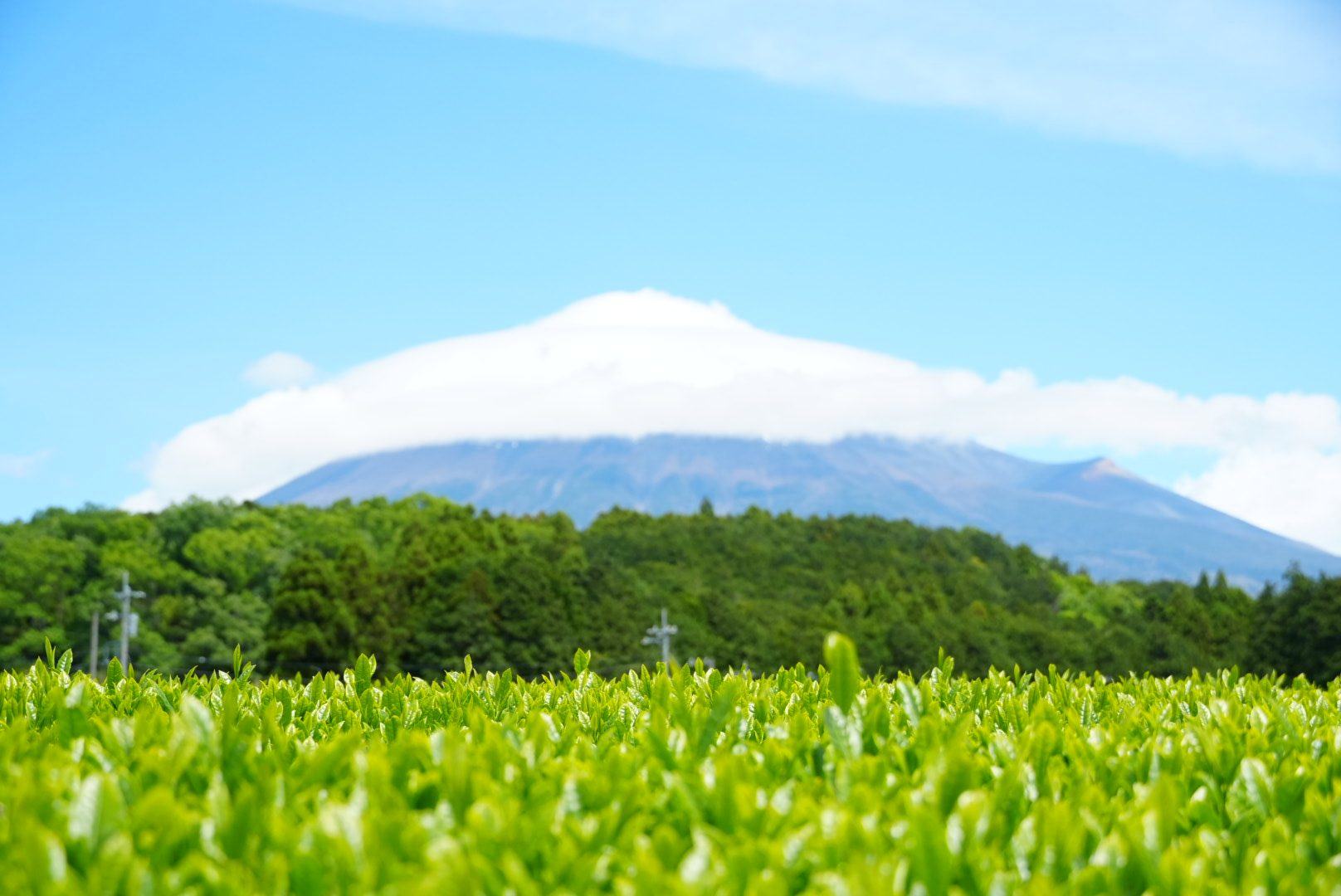
- The tea bushes are shaded for a few weeks before harvest. That gives more umami and less bitterness.
- The leaves are steamed the same day, dried flat without rolling, and the stems are sorted out. Now they are called tencha.
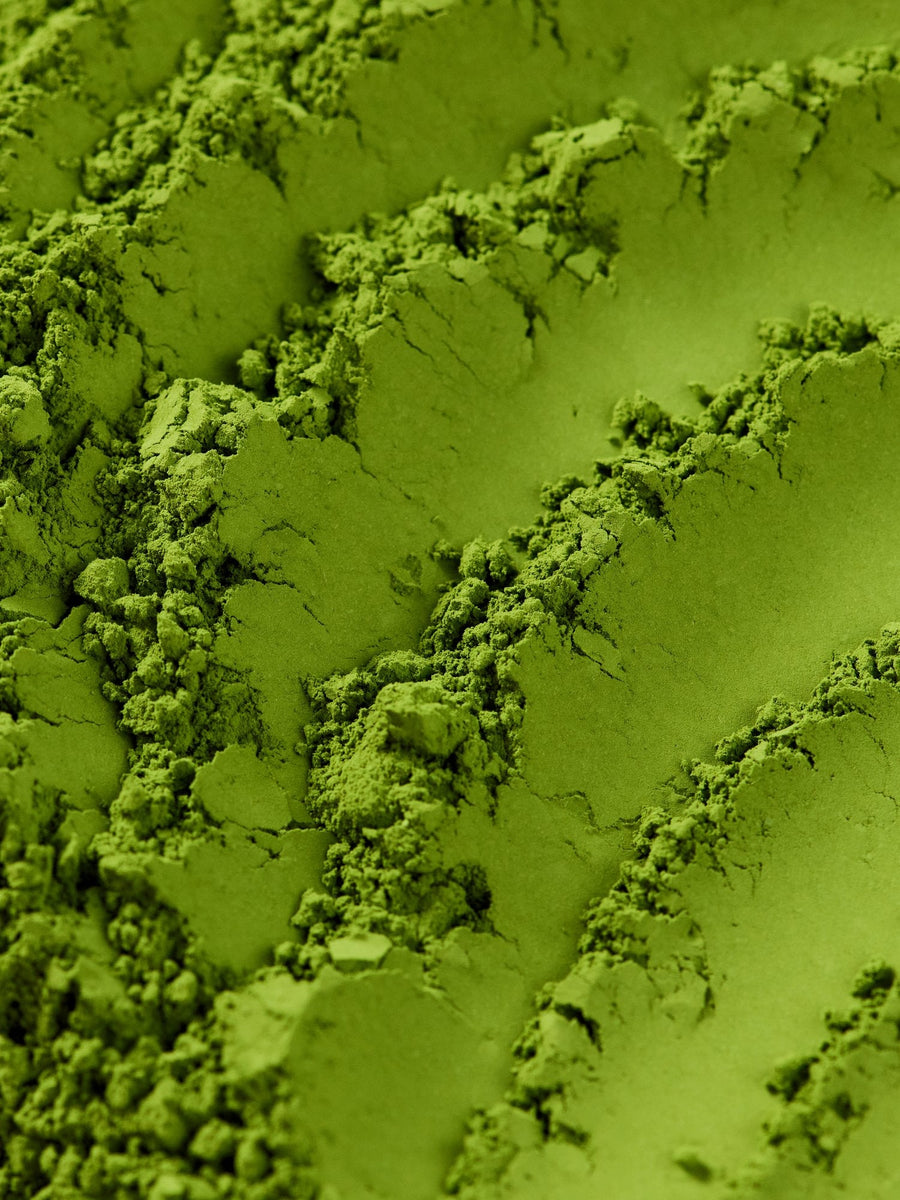
- The tencha is ground into a fine powder: matcha. You drink the whole leaf, not just what steeps out.
Ground green tea from other leaves, such as sencha, is not matcha. Look for region, cultivar and harvest.
Would you rather taste than read?
The quiz suggests a tea based on how you drink your matcha. Further down are teas to start with.
- 9
- steps from bush to bowl
- 4
- regions in Japan, Kawane on its way
- 6
- matcha teas in stock right now
- 2
- harvests: first and second
What is matcha?
Ground tea from shaded leaves.
By the Japanese industry definition, matcha is tencha – shaded, steamed and dried tea leaves without stems – ground into a fine powder. You drink the whole leaf instead of steeping it and throwing it away.
| Property | Matcha | Sencha (ordinary green tea) | Green tea powder |
|---|---|---|---|
| Shaded before harvest | Yes, 2–4 weeks | Usually not | Usually not |
| Rolled | No, dried flat | Yes, into needles | Varies |
| Stems and veins | Sorted out | Partly left in | Often left in |
| How you drink it | The whole leaf, whisked | Steeped, leaves thrown away | Stirred in |
| Colour and taste | Bright green, umami, sweet | Yellow-green, fresh, astringent | Duller, often bitter |
“Matcha” is not a protected name in the EU. So always read the origin, not just the packaging.
9 steps
From tea bush to bowl.
-
The tea bush and the cultivar
茶樹 · chaju
All matcha comes from the same plant, Camellia sinensis. The difference lies in the cultivar, the soil, the climate and how the leaves are handled. Japan has bred cultivars for different tastes: Yabukita is classic and balanced, Okumidori deep and round, Tsuyuhikari floral, Saemidori sweet and smooth.
In the cup The cultivar is one of the reasons No 6 tastes deep and round.
-
Shading
被覆 · hifuku
A few weeks before harvest the tea bushes are covered, either directly on the bushes or with a frame above them, tana. With less sun the leaves form more chlorophyll and keep more theanine, an amino acid that gives umami. At the same time fewer catechins form, which give bitterness.
In the cup Deep green colour, more umami, less bitterness. And the scent of nori, ooika, which forms when shaded leaves are steamed.
Longer shading gives more umami but a smaller harvest per area. That is one of the reasons matcha costs what it does.
-

Harvest
摘採 · tekisai
The first spring harvest, ichibancha, in April–May gives the softest leaves. Later summer harvests give stronger leaves that often suit a latte. The leaves have to reach the factory quickly, before they start to oxidise.
In the cup The first harvest gives more umami and a softer taste. Our ceremonial teas state the harvest on the product page.
-

Steaming
蒸し · mushi
The same day as the harvest, the leaves are steamed briefly. The heat stops the enzymes that would otherwise turn the leaves brown, the same process that darkens a cut apple. Steaming is what keeps Japanese tea green; in China green tea is more often pan-fired, which gives a different taste.
In the cup The bright green colour and the fresh, green scent.
-

Cooling and drying
冷却と乾燥 · reikyaku to kansō
After steaming, the leaves are blown apart and cooled, then dried in a tencha oven, tencha-ro. This is where matcha differs from sencha: sencha is rolled and kneaded into thin needles. Leaves for matcha are never rolled, they are dried flat.
In the cup Because the leaves are not rolled, the powder later becomes smooth and even.
-

Sorting into tencha
碾茶 · tencha
The dried leaves are shaken and sieved. Stems and veins are sorted out, leaving thin, brittle leaf flakes: tencha. Tencha is the raw material for all matcha; by the Japanese definition, matcha is ground tencha, not just any green tea.
In the cup Without stems and veins the powder is sweet and fine instead of rough and gritty.
-
Grinding
挽く · hiku
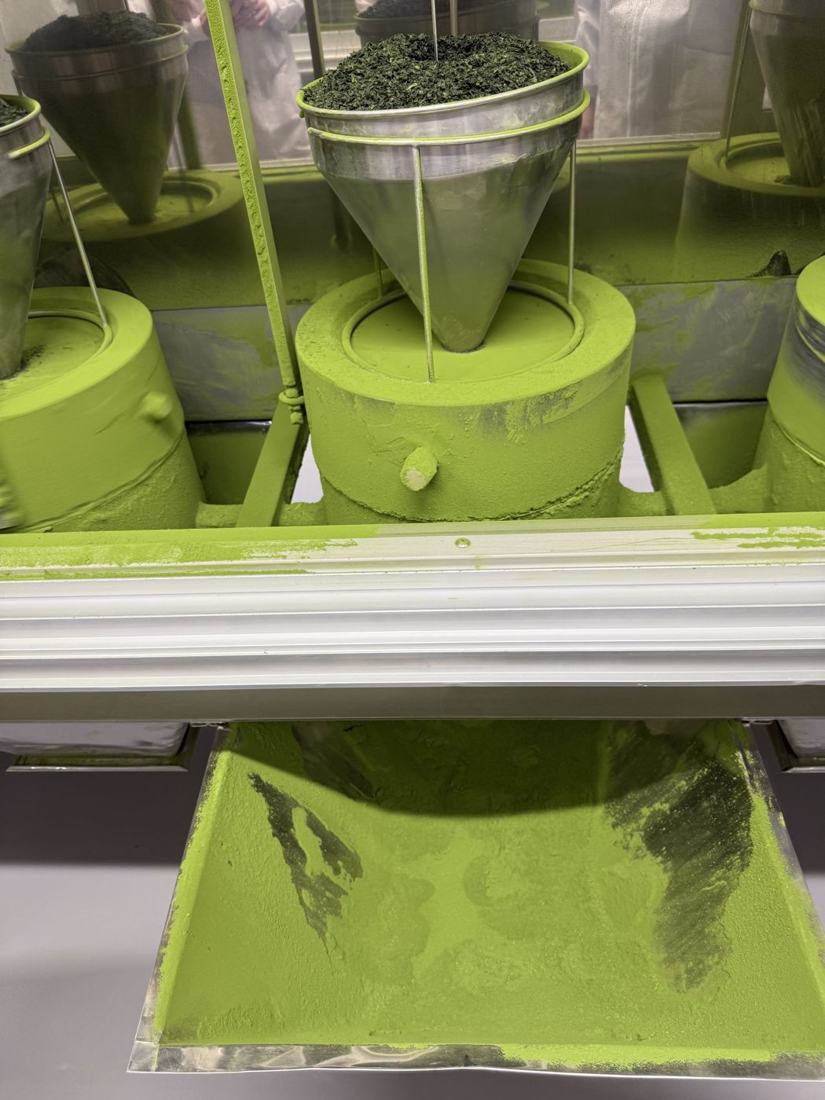
The tencha is ground into a very fine powder. Traditionally this is done in a stone mill, ishi-usu, which grinds only a few tens of grams an hour so the leaves do not heat up. Other mills exist too. Japanese research shows that the particles usually end up around 10–20 micrometres; that decides how smooth the matcha feels and how it foams.
In the cup A finer, more even powder foams better and feels smoother in the mouth.
Not all our teas are stone-ground. We state the grinding per tea once the producer has confirmed it.
-
Packing and storage
保存 · hozon
Matcha is sensitive to light, air, moisture and heat. That is why it is packed tightly and protected from light. At home: reseal the pouch after each use, keep it cool and dark, and let a cold pouch reach room temperature before you open it.
In the cup Fresh matcha is green and smells sweet. Old matcha turns olive-brown and stale.
-

In your bowl
点てる · tateru
Sift 2 g, pour in 75 ml of water at about 80 °C and whisk quickly back and forth. You should get a fine foam and a smooth, sweet cup with a slight astringency. That is the whole journey, from bush to bowl.
In the cup Bitter? Try cooler water or a little less powder.


The terms
Same leaf, different tea.
Almost all Japanese green tea comes from the same tea bush. What separates tencha, sencha and gyokuro is two decisions: are the leaves shaded before harvest, and are they rolled after steaming?
The whole family, step by step
Matcha is the only one that is shaded, dried without rolling and ground.
| Tea | Shaded | Rolled | Ground | Roasted | You drink |
|---|---|---|---|---|---|
| Matcha 抹茶 | 2–4 weeks | – | ● | – | The whole leaf, whisked |
| Gyokuro 玉露 | about 3 weeks | ● | – | – | What steeps out |
| Kabusecha かぶせ茶 | about 1–2 weeks | ● | – | – | What steeps out |
| Sencha 煎茶 | – | ● | – | – | What steeps out |
| Hojicha ほうじ茶 | – | ● | – | ● | What steeps out |
| Green tea powder 粉末茶 | – | ● | ● | – | The whole leaf, unshaded |
All these teas are steamed. Hojicha is usually made from sencha or later harvests and can also be roasted from stems. The table shows the most common way.
What the names mean
The Japanese names often simply describe how the tea is made. Know the characters and you know almost the whole family tree.
- 抹茶Matcha“Powdered tea”. The whole leaf, ground.
- 碾茶Tencha“Tea for grinding”. The name says what it will become.
- 煎茶Sencha“Simmered tea”. Steeped in water, the leaves are thrown away.
- 玉露Gyokuro“Jade dew”. Shaded like tencha, but rolled.
- かぶせ茶Kabusecha“Covered”. Shorter shading than gyokuro.
- 焙じ茶Hojicha“Roasted”. Green tea roasted brown.
- 一番茶Ichibancha“First tea”. The first spring harvest.
- 粉末茶Funmatsucha“Powder”. Ground green tea, not matcha.
Test yourself
Are tencha and matcha the same thing?
Almost. Tencha is the dried leaf flakes; matcha is tencha ground into powder. All matcha was tencha first.
Can you grind sencha and get matcha?
No. It becomes green tea powder, funmatsucha. The leaves were not shaded and were rolled, so the colour is duller and the taste usually more bitter.
What separates gyokuro from matcha?
Both are shaded. But gyokuro is rolled and steeped in water, while leaves for matcha are dried flat and ground. With matcha you drink the whole leaf.
Why is ichibancha more expensive?
The first spring shoots are fewer and softer and have more amino acids, which means more umami. Later harvests give more leaves but a more astringent taste.
What is ooika?
The shade aroma: sweet, like nori or cooked corn. It forms when shaded leaves are steamed and is a sign of shading, not of old tea.
Is hojicha a different plant?
No. It is green tea from the same bush, roasted until brown, which gives a roasted, mild taste.
The harvests
Ichibancha, nibancha and the rest of the year.
A tea bush is harvested several times a year. Each harvest gives different leaves, and you can taste it. All our matcha comes from the first two harvests.
Ichibancha
一番茶 · first harvest
The bushes have rested all winter. The young shoots are soft and full of amino acids. Most umami, least bitterness.
Nibancha
二番茶 · second harvest
More sun and warmth give stronger leaves with more catechins. Bolder, a little more astringent. Suits a latte.
Sanbancha
三番茶 · third harvest
Rarely used for matcha, usually for simpler green tea. Not in our range.
Akibancha
秋番茶 · autumn harvest
For baking and industry. Not in our range.
Approximate. Timing differs between regions and years: in Kagoshima in the south the harvest starts earlier than in Shizuoka.
The regions
Where our matcha comes from.
The cultivars
Same plant, different taste.
How to prepare it
Three basic recipes.
With water · usucha
2 g matcha · 75 ml water, about 80 °C · whisk 15–30 s in a W motion
Hot latte
3 g matcha · 100 ml water, about 80 °C · 100 ml hot milk
Iced latte
3 g matcha · 60 ml water, about 80 °C · 150 ml cold milk and ice
Myths and facts
What people often get wrong.
Myth
Uji is a quality grade.Fact Uji is a tea area in Kyoto. It says where the tea comes from, not how good it is. Our teas come from Yame, Kagoshima and Shizuoka.
Myth
Matcha and green tea powder are the same thing.Fact Matcha is ground tencha from shaded leaves. Ground sencha is green tea powder, funmatsucha, and tastes different.
Myth
“Ceremonial grade” is an official quality grade.Fact There is no official grading in Japan or the EU. Ceremonial grade is often used for matcha meant for drinking with water. That is how we use it in our names. Also look at harvest, cultivar, region and colour.
Myth
Matcha should taste like grass.Fact A strongly grassy, bitter taste usually points to short shading, a later harvest, old powder or water that is too hot.
Myth
A seaweed smell means the matcha is bad.Fact A sweet nori scent is the shade aroma ooika, a sign of quality. A rancid or stale smell means it is old.
Myth
Greener is always better.Fact Colour says a lot about shading and freshness, but it is only one of several things to judge by.
Myth
All matcha is stone-ground.Fact The stone mill is traditional, but there are other methods. Not all our teas are stone-ground.
Myth
Matcha contains no caffeine.Fact It contains about 30–40 mg per 2 g cup, according to independent tests.
Glossary
Words you will come across.
Types of tea
- Matcha 抹茶
- Ground tencha. You drink the whole leaf.
- Tencha 碾茶
- Shaded, steamed, flat-dried leaves without stems. The raw material for matcha.
- Sencha 煎茶
- Unshaded, rolled green tea steeped in water.
- Gyokuro 玉露
- Shaded like tencha but rolled, and steeped in water.
- Kabusecha かぶせ茶
- More briefly shaded, rolled tea.
- Hojicha ほうじ茶
- Roasted green tea, brown and mild.
- Genmaicha 玄米茶
- Green tea with roasted rice.
- Funmatsucha 粉末茶
- Ground green tea, for example sencha. Not matcha.
Growing and making
- Hifuku 被覆
- Shading before harvest.
- Tana 棚
- Shade frame above the bushes.
- Jikagake 直掛け
- Covers laid directly on the bushes.
- Ichibancha 一番茶
- The first spring harvest.
- Nibancha 二番茶
- The second harvest, early summer.
- Cultivar 品種
- Cultivar, for example Yabukita or Okumidori.
- Tencha-ro 碾茶炉
- The oven where tencha leaves are dried flat, without rolling.
- Ishi-usu 石臼
- Stone mill.
- Aracha 荒茶
- Unrefined tea straight from the factory, before sorting and finishing.
Preparation and tools
- Usucha 薄茶
- Thin matcha: about 2 g whisked with water.
- Koicha 濃茶
- Thick matcha: twice the powder and half the water, kneaded slowly with the whisk.
- Chasen 茶筅
- Bamboo whisk.
- Chawan 茶碗
- Matcha bowl.
- Chashaku 茶杓
- Bamboo scoop, about 1 g per heaped scoop.
- Kusenaoshi くせ直し
- Whisk holder that keeps the whisk’s shape.
Taste
- Umami 旨味
- Full, broth-like taste.
- Theanine テアニン
- An amino acid in tea leaves that gives umami. Shading preserves it.
- Catechins カテキン
- Compounds in tea leaves that give bitterness and astringency. More sun gives more.
- Ooika 覆い香
- The shade aroma: sweet, like nori or cooked corn.
- Shibumi 渋み
- Astringency, a pleasant dryness in the mouth.
Try it yourself
Taste the difference.
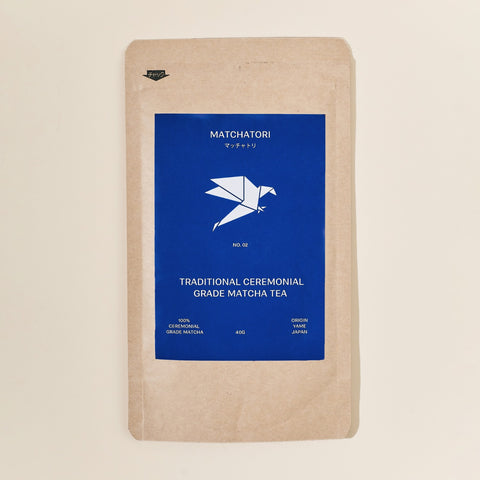
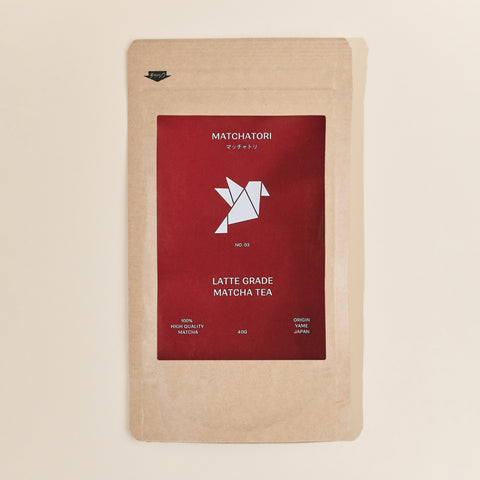
Two good places to start: one with water and one for lattes.
Sources
- Nihon-cha (日本茶業中央会): labelling standard for green tea, definition of tencha and matcha.
- Shizuoka Prefecture, tea research (tencha: shading, harvest, nitrogen and chlorophyll).
- Int. J. Mol. Sci. 2022: 85–95% shading and theanine/catechins.
- Sawamura et al. 2010, 2019: particle size with different grinding.
- MAFF (Japanese Ministry of Agriculture): water temperature and extraction of theanine and catechins.
- Stiftung Warentest, matcha test April 2026: caffeine per gram.
- Kyoto Prefecture tea industry association (京都府茶業会議所): the definition of Ujicha, tea from the area around Kyoto.